Wednesday, February 29, 2012
lions
the lions were released for an afternoon swim. the water was smooth, sunlit and pale -- it could have been early morning or late afternoon. they stood on a dock, anxiously waiting for a turn to dive in. i saw the male lion first, from the passenger seat of a bright yellow ultralight helicopter piloted by my aunt.
"let's see the lions!" she said.
the lion stared at me -- his expression a startling blend of cruelty and calm. his mane dried rapidly, and as it did, he was the size of train car. we flew closer, and saw a chain link fence cutting through a decaying concrete jetty.
six lionesses waited on the dock. a man in dark aviators and a suave 'stache sat in a glass booth with a shotgun and an intercom, allowing no more than one lion in the water at a time.
among the lions was a natural power corralled by a sort of ignorant weakness...the lions were captives, their raw power diminished in their stance but not in their eyes. were these lions tame? were they aware of their captivity? did they hold a grudge?
in the eyes of the first lion, i saw a dare and a warning. an enticement, and a promise of pain if boundaries were overstepped. don't forget, they seemed to say, that without these fences, and without these bullets trained on my heart, i could destroy you. i would like to destroy you. so come closer. let me taste your fear. let me remind you where you stand in all of this.
we hovered over the lion in the water, watched him roll over and over on the surface in a kind of obligatory pleasure. this was the closest thing to freedom that he had. at first, we were unnoticed. his astonishing size and oblivious bathing suggested an unspoken tolerance, or permission. but we were wrong.
writhing, rolling, twisting, eyes closed -- he suddenly reared up and opened his jaws as if to swallow us completely. he roared, his eyes a reptilian yellow-green, with pupils that recalled a recent warning. we lifted high in the sky, and he became small again. we left him gaping at thin air, arching against the symptoms of incarceration to reclaim his murderous instinct.
his bloodlust was easily forgiven. death, in this manner, was not the gory theme-park zoo-gone-wrong ending that it might be in the waking world. it was a gateway to a sinister heaven. it was a cosmic step-through-the-looking-glass chase after something less mundane --
it was glitter in the veins.
Tuesday, February 28, 2012
Wednesday, February 22, 2012
fertility
In the wake of 2011 –a year that inspired Time magazine to crown “The Protester” as Person of the Year and one that Forbes’ dubbed “The Year of Uncertainty” – it’s no surprise that more people want to burn The Man than ever before. Perhaps in anticipation of the proverbial Man’s soaring unpopularity and a first-ever sold out Burning Man 2011, Black Rock City LLC (or BRC, organizers of the annual Burning Man festival) introduced a lottery-based ticket sale for Burning Man 2012. But rather than promoting its self-proclaimed culture of “radical inclusivity”, the lottery method left thousands of would-be Burners feeling, instead, burned by The Man.
The lottery churned out more losers than winners, divided integrated groups (“theme camps”), artists and veteran Burners who have long been the torch bearers of Burning Man tradition. True to the times, disgruntled Burners took to online forums and social media to vent, compare notes and lament the halo of uncertainty that looms over Burning Man 2012. San Francisco Bay Chronicle summed up the worst of it with an article titled:Burning Man Ticket Fiasco Creates an Uncertain Future.
As a first-time Burner (or birgin, in Burning Man lingo), the apocalyptic appeal of 2012 inspired my own inaugural hajj to the desert – a notion I shared with about 80,000 lottery entrants. I imagine their rationale was similar to mine: If the Maya were right and life as we know it is trending toward a cataclysmic halt, it’s time to check the bucket list. And when it all hits the fan, where better to find yourself than wandering in 105 degree heat, butt-naked in Nevada at a week-long desert festival that includes a pyrotechnic “F---You” to The Man? After everything The Man has dealt us in 2011 (and the past decade for that matter) at least 80,000 people agree that burning him to the ground would be cathartic.
Ticketless Burners and tribal schisms are one thing, but the 2012 lottery gods also favored a high birgin to Burner ratio, leaving many to riddle: How can Burning Man be all that it has grown to be in its 25-year history if it is rife with birgins? Will it be a ringmaster-less circus with children taming the tigers? Addressing this year’s deluge of birgins, Burning Man's Communications Manager Andie Grace blogged: “You’ve arrived at a very interesting time, can you tell?...We love newcomers. However, if new Burners are the lifeblood, the existing community of collaborators, projects, and creativity is the corpus of Burning Man.”
As the lottery dust settles, uncertainty emerges as the red-headed step child of good intentions turned sour. But to say that the miscalculations of one festival’s organizing committee have single-handedly created an uncertain future is hyperbole at best. As long as turbulent uncertainty insists on showing up as the uninvited and party-fouling guest of the past decade, it might be time to give it a formal place card.
Uncertainty – the byproduct of abrupt and unwelcome change – is to now as peace signs and free love were to the 60’s. Change is often labeled positive when it means regime change, social progress, and opportunity. But when it leaks into hallowed tradition, change loses its charm. Although change has been a singular constant throughout history, its wavelengths seem to have shortened as it comes in higher potency, higher frequency, and greater intensity than ever before. The Burning Man 2012 ticket fiasco is a microcosmic sample of this all-encompassing brand of change that takes no prisoners and spares nothing in its mission to usher in a new era – or to escort us out of existence.
Dissecting the effects of change and uncertainty on a macro level can be overwhelming and virtually impossible. Fiasco aside, the circumstances surrounding Burning Man 2012 offer a finer lens for examining how our perception of uncertainty can have a greater impact than uncertainty itself.
1. Uncertainty is what we make of it.
Uncertainty is not a cozy word. But when the track we’ve been on has landed us in hot water, the only certainties that come from expired ideals are those that ensure the same unsustainable results. Certainty and uncertainty have been typecast as hero and villain respectively, but pervasive change has allowed them to swap roles. Certainty for certainty’s sake is no longer serving us. Adaptation requires something new, something experimental, something that might fail. While the Burning Man ticket lottery system backfired in some ways, it successfully underscored the power of perception. In hindsight, BRC organizers speculated, “We can now see that some of that happened simply because the perception of scarcity drove fear and action for all of us….Game theory won out over good wishes.” Attempts to lessen the blow of change and uncertainty can yield unintended consequences – not all of which are inherently negative. The wild card nature of uncertainty means that its power is unpredictably neutral. While fear of uncertainty can destroy and divide, tolerance can cultivate possibility.
2. Facing Uncertainty: Fight or Flow
Change and uncertainty are not controlled substances, and they cannot be selectively applied. We can’t route for democracy in the Middle East, accountability in Washington, and a viable planet without expecting uncomfortable changes in absolutely every area of our lives. Uncertainty can either be a force that inspires futile resistance or it can be the momentum behind a miracle. The paradox of uncertainty is like an ocean swimmer caught in a riptide: fear kicks in and instinct says, “Swim ashore!” But fighting the current can be fatal. Swimming parallel to the current – away from the certainty of dry land – is the best chance of survival. The fear of scarcity and exclusion spurred by the Burning Man ticket lottery may be the metaphorical equivalent of fighting the current. For those still hoping to get a ticket, going with the flow is the best bet. It’s not about giving up and accepting defeat – it’s about trusting that the forces of uncertainty will carry you to safer waters without a fear-induced struggle.
3. Mitigating Uncertainty: Embracing Structural Change, Preserving Tradition
For veteran Burners, passing the torch to the newcomers, novices, birgins will require some forfeit of creative control, a foray into the unknown, and faith in uncertainty. Change can tear at the fabric of tradition and familiarity – threatening the way it’s always been, the way it “should be”. Change and uncertainty, like the twins in The Shining, appear at the most inopportune moments. We can’t outsmart it, we can’t put a muzzle on it, and there is no such thing as Change Zero with lime. Moreover, attempts to mitigate the shock of change can have adverse affects. But where do we draw the line on what we’re willing to give up? Can Burning Man be Burning Man without its “creative corpus”? What can be salvaged, what is worth preserving, and how can the old compliment the new? Perhaps the answer lies in the Burning Man 2012 theme: Fertility. Fertility is the midpoint between uncertainty and certainty. It is the potential --not the promise – of a rebirth. Fertility belongs to youth, to Burners, virgins and birgins alike. Fertility also involves a necessary cycle of destruction – a literal shedding of the old in preparation for the new.
Whether you hold a golden ticket to Burning Man 2012 or not, change and uncertainty are here to stay. The power of perspective will play a pivotal role in how things shake out. In that vein, an alternative to the hyperbolic Burning Man Ticket Fiasco Creates an Uncertain Future might be Burning Man Ticket Phenomenon Reflects an Uncertain Future… and that’s not such a bad thing.
The lottery churned out more losers than winners, divided integrated groups (“theme camps”), artists and veteran Burners who have long been the torch bearers of Burning Man tradition. True to the times, disgruntled Burners took to online forums and social media to vent, compare notes and lament the halo of uncertainty that looms over Burning Man 2012. San Francisco Bay Chronicle summed up the worst of it with an article titled:Burning Man Ticket Fiasco Creates an Uncertain Future.
As a first-time Burner (or birgin, in Burning Man lingo), the apocalyptic appeal of 2012 inspired my own inaugural hajj to the desert – a notion I shared with about 80,000 lottery entrants. I imagine their rationale was similar to mine: If the Maya were right and life as we know it is trending toward a cataclysmic halt, it’s time to check the bucket list. And when it all hits the fan, where better to find yourself than wandering in 105 degree heat, butt-naked in Nevada at a week-long desert festival that includes a pyrotechnic “F---You” to The Man? After everything The Man has dealt us in 2011 (and the past decade for that matter) at least 80,000 people agree that burning him to the ground would be cathartic.
Ticketless Burners and tribal schisms are one thing, but the 2012 lottery gods also favored a high birgin to Burner ratio, leaving many to riddle: How can Burning Man be all that it has grown to be in its 25-year history if it is rife with birgins? Will it be a ringmaster-less circus with children taming the tigers? Addressing this year’s deluge of birgins, Burning Man's Communications Manager Andie Grace blogged: “You’ve arrived at a very interesting time, can you tell?...We love newcomers. However, if new Burners are the lifeblood, the existing community of collaborators, projects, and creativity is the corpus of Burning Man.”
As the lottery dust settles, uncertainty emerges as the red-headed step child of good intentions turned sour. But to say that the miscalculations of one festival’s organizing committee have single-handedly created an uncertain future is hyperbole at best. As long as turbulent uncertainty insists on showing up as the uninvited and party-fouling guest of the past decade, it might be time to give it a formal place card.
Uncertainty – the byproduct of abrupt and unwelcome change – is to now as peace signs and free love were to the 60’s. Change is often labeled positive when it means regime change, social progress, and opportunity. But when it leaks into hallowed tradition, change loses its charm. Although change has been a singular constant throughout history, its wavelengths seem to have shortened as it comes in higher potency, higher frequency, and greater intensity than ever before. The Burning Man 2012 ticket fiasco is a microcosmic sample of this all-encompassing brand of change that takes no prisoners and spares nothing in its mission to usher in a new era – or to escort us out of existence.
Dissecting the effects of change and uncertainty on a macro level can be overwhelming and virtually impossible. Fiasco aside, the circumstances surrounding Burning Man 2012 offer a finer lens for examining how our perception of uncertainty can have a greater impact than uncertainty itself.
1. Uncertainty is what we make of it.
Uncertainty is not a cozy word. But when the track we’ve been on has landed us in hot water, the only certainties that come from expired ideals are those that ensure the same unsustainable results. Certainty and uncertainty have been typecast as hero and villain respectively, but pervasive change has allowed them to swap roles. Certainty for certainty’s sake is no longer serving us. Adaptation requires something new, something experimental, something that might fail. While the Burning Man ticket lottery system backfired in some ways, it successfully underscored the power of perception. In hindsight, BRC organizers speculated, “We can now see that some of that happened simply because the perception of scarcity drove fear and action for all of us….Game theory won out over good wishes.” Attempts to lessen the blow of change and uncertainty can yield unintended consequences – not all of which are inherently negative. The wild card nature of uncertainty means that its power is unpredictably neutral. While fear of uncertainty can destroy and divide, tolerance can cultivate possibility.
2. Facing Uncertainty: Fight or Flow
Change and uncertainty are not controlled substances, and they cannot be selectively applied. We can’t route for democracy in the Middle East, accountability in Washington, and a viable planet without expecting uncomfortable changes in absolutely every area of our lives. Uncertainty can either be a force that inspires futile resistance or it can be the momentum behind a miracle. The paradox of uncertainty is like an ocean swimmer caught in a riptide: fear kicks in and instinct says, “Swim ashore!” But fighting the current can be fatal. Swimming parallel to the current – away from the certainty of dry land – is the best chance of survival. The fear of scarcity and exclusion spurred by the Burning Man ticket lottery may be the metaphorical equivalent of fighting the current. For those still hoping to get a ticket, going with the flow is the best bet. It’s not about giving up and accepting defeat – it’s about trusting that the forces of uncertainty will carry you to safer waters without a fear-induced struggle.
3. Mitigating Uncertainty: Embracing Structural Change, Preserving Tradition
For veteran Burners, passing the torch to the newcomers, novices, birgins will require some forfeit of creative control, a foray into the unknown, and faith in uncertainty. Change can tear at the fabric of tradition and familiarity – threatening the way it’s always been, the way it “should be”. Change and uncertainty, like the twins in The Shining, appear at the most inopportune moments. We can’t outsmart it, we can’t put a muzzle on it, and there is no such thing as Change Zero with lime. Moreover, attempts to mitigate the shock of change can have adverse affects. But where do we draw the line on what we’re willing to give up? Can Burning Man be Burning Man without its “creative corpus”? What can be salvaged, what is worth preserving, and how can the old compliment the new? Perhaps the answer lies in the Burning Man 2012 theme: Fertility. Fertility is the midpoint between uncertainty and certainty. It is the potential --not the promise – of a rebirth. Fertility belongs to youth, to Burners, virgins and birgins alike. Fertility also involves a necessary cycle of destruction – a literal shedding of the old in preparation for the new.
Whether you hold a golden ticket to Burning Man 2012 or not, change and uncertainty are here to stay. The power of perspective will play a pivotal role in how things shake out. In that vein, an alternative to the hyperbolic Burning Man Ticket Fiasco Creates an Uncertain Future might be Burning Man Ticket Phenomenon Reflects an Uncertain Future… and that’s not such a bad thing.
Wednesday, January 25, 2012
three minutes
yesterday, i listened to 14 people speak on behalf of 30 acres of wilderness in utah's wasatch backcountry. the man in charge -- a gray-haired city councilman -- had the ironic surname of "wilde". his stance on whether or not 30 acres of pristine mountain range should be sold to a canadian developer was unclear, but his disdain for the 100+ uninvited guests in his chambers was apparent. he huffed, he puffed, but he didn't blow the public commentary down.
the rally was rife with rag-a-muffins, ski bums on crutches, hippie chicks in knitted caps, reporters, bearded sages,
mt.dew-slurping punks, patagucci sporters, meteorologists, mothers and public utilities reps (namely, watershed officials). the auditorium was packed. one sign stood out among the others: "skilink is a snowjob" and "how many kickbacks does it take to build skilink?" featuring the iconic tootsie pop owl.
mr. wilde explained to the crowd that no decisions would be made that day, and advised us to return at a nondescript but "reasonably near future date". he noted, however begrudgingly, that if we insisted on speaking then our rights allowed us as much. no one budged.
the first speaker was a rep for 'save our canyons'. toward the end of his address to a half-moon panel of puffy-eyed politicians, his voice quivered. wilde cut him off -- "your three minutes are up". a voice from the plebes blurted "he can have mine".
laughter erupted, wilde denied the offer and called the rabble to order. group reps would be granted 5 minutes, individuals 3 minutes.
each speaker was required to state his or her name, address, and affiliation.
one speaker in a lime green jacket and brown trucker hat ran down to the podium. he stated his name, his address, and explained that he was speaking 'on behalf of the unborn'.
he recited a 1916 quote by theodore roosevelt from his iphone:
"Defenders of the short-sighted men who in their greed and selfishness will, if permitted, rob our country of half its charm by their reckless extermination of all useful and beautiful wild things sometimes seek to champion them by saying the 'the game belongs to the people.' So it does; and not merely to the people now alive, but to the unborn people. The 'greatest good for the greatest number' applies to the number within the womb of time, compared to which those now alive form but an insignificant fraction. Our duty to the whole, including the unborn generations, bids us restrain an unprincipled present-day minority from wasting the heritage of these unborn generations. The movement for the conservation of wild life and the larger movement for the conservation of all our natural resources are essentially democratic in spirit, purpose, and method."
two reps from an affected private corporation also addressed the panel -- somewhere, the question of whether public and protected land should be sold in a back-door deal to a canadian developer became a question of whether or not existing resorts may continue to offer summer activities. the legislation changes required to allow further mountain development were cleverly translated into a legal definition crisis for "ski resort" and all that it entails. the two reps underscored the harmless -- even beneficial -- aspects of developing land they don't own, for private profit that will never trickle down to the people who live here. the word pillage came to mind.
the panel discussed the urgency of redefining the legislation (FCOZ) not in order to expedite development plans in public land, but to allow these existing resorts to maintain their summer activities. suddenly, oktoberfest in a parking lot became the central focus and concern of the panel and the highlighted topic of the resort reps who addressed them. nevermind the 30 acres of wilderness on the chopping block, or the threat to a critical watershed for over one million desert dwellers.
the word 'obfuscation' came to mind. the rhetorical red-herring nature of politics played out on a micro scale. nevermind clean water. nevermind the precedent of auctioning public land in private with broad terms permitting untold development. let's talk about humble ski resorts trying to carry on business as usual, provide utahns with jobs (described by one speaker as "slinging hash at snowbird"), and help the plebes out with transportation issues (to the tune of $96/ride that will flow directly to canada).
we don't need jobs. we need to wake up. we need water. we need natural havens. we need to protect what can never be regained once it is sold and scarred for profit.
one speaker noted: what "they" have is the advantage of gold, lawyers, paid advocates and special interests that trump the will of the people or the integrity of our watershed and the dwindling refuge of people-free wilderness. free access to pristine public land is the inextricable wealth of the masses. it made me think about the recession -- i thought, maybe this is mother nature's plan to protect herself. as the divide between haves and have-nots widens, the haves devise new ways to monetize nature, while the have-nots are increasingly recognizing wild earth as a refuge. it would seem that as team have-nots grows in number, mother nature's chances for survival would increase. but this cold war between greed and survival won't be lost because proponents for survival are outnumbered. it is a david and goliath show-down dominated by government's golden rule: whoever has the gold makes the rules. moreover, manipulation and obfuscation are formidable weapons that have been expertly forged by team goliath. but as soon as that paradigm is sufficiently deconstructed, i think team david will find its lucky stone.
i thought about these mountains, out there in the snow, carrying on, oblivious....how we could sit in a cramped auditorium and debate the future and integrity of such sinister beauty with which we share a sacred symbiosis. i thought about the absurd asymmetry of what was at stake compared to what we had to defend it: three minutes.
the rally was rife with rag-a-muffins, ski bums on crutches, hippie chicks in knitted caps, reporters, bearded sages,
mt.dew-slurping punks, patagucci sporters, meteorologists, mothers and public utilities reps (namely, watershed officials). the auditorium was packed. one sign stood out among the others: "skilink is a snowjob" and "how many kickbacks does it take to build skilink?" featuring the iconic tootsie pop owl.
mr. wilde explained to the crowd that no decisions would be made that day, and advised us to return at a nondescript but "reasonably near future date". he noted, however begrudgingly, that if we insisted on speaking then our rights allowed us as much. no one budged.
the first speaker was a rep for 'save our canyons'. toward the end of his address to a half-moon panel of puffy-eyed politicians, his voice quivered. wilde cut him off -- "your three minutes are up". a voice from the plebes blurted "he can have mine".
laughter erupted, wilde denied the offer and called the rabble to order. group reps would be granted 5 minutes, individuals 3 minutes.
each speaker was required to state his or her name, address, and affiliation.
one speaker in a lime green jacket and brown trucker hat ran down to the podium. he stated his name, his address, and explained that he was speaking 'on behalf of the unborn'.
he recited a 1916 quote by theodore roosevelt from his iphone:
"Defenders of the short-sighted men who in their greed and selfishness will, if permitted, rob our country of half its charm by their reckless extermination of all useful and beautiful wild things sometimes seek to champion them by saying the 'the game belongs to the people.' So it does; and not merely to the people now alive, but to the unborn people. The 'greatest good for the greatest number' applies to the number within the womb of time, compared to which those now alive form but an insignificant fraction. Our duty to the whole, including the unborn generations, bids us restrain an unprincipled present-day minority from wasting the heritage of these unborn generations. The movement for the conservation of wild life and the larger movement for the conservation of all our natural resources are essentially democratic in spirit, purpose, and method."
two reps from an affected private corporation also addressed the panel -- somewhere, the question of whether public and protected land should be sold in a back-door deal to a canadian developer became a question of whether or not existing resorts may continue to offer summer activities. the legislation changes required to allow further mountain development were cleverly translated into a legal definition crisis for "ski resort" and all that it entails. the two reps underscored the harmless -- even beneficial -- aspects of developing land they don't own, for private profit that will never trickle down to the people who live here. the word pillage came to mind.
the panel discussed the urgency of redefining the legislation (FCOZ) not in order to expedite development plans in public land, but to allow these existing resorts to maintain their summer activities. suddenly, oktoberfest in a parking lot became the central focus and concern of the panel and the highlighted topic of the resort reps who addressed them. nevermind the 30 acres of wilderness on the chopping block, or the threat to a critical watershed for over one million desert dwellers.
the word 'obfuscation' came to mind. the rhetorical red-herring nature of politics played out on a micro scale. nevermind clean water. nevermind the precedent of auctioning public land in private with broad terms permitting untold development. let's talk about humble ski resorts trying to carry on business as usual, provide utahns with jobs (described by one speaker as "slinging hash at snowbird"), and help the plebes out with transportation issues (to the tune of $96/ride that will flow directly to canada).
we don't need jobs. we need to wake up. we need water. we need natural havens. we need to protect what can never be regained once it is sold and scarred for profit.
one speaker noted: what "they" have is the advantage of gold, lawyers, paid advocates and special interests that trump the will of the people or the integrity of our watershed and the dwindling refuge of people-free wilderness. free access to pristine public land is the inextricable wealth of the masses. it made me think about the recession -- i thought, maybe this is mother nature's plan to protect herself. as the divide between haves and have-nots widens, the haves devise new ways to monetize nature, while the have-nots are increasingly recognizing wild earth as a refuge. it would seem that as team have-nots grows in number, mother nature's chances for survival would increase. but this cold war between greed and survival won't be lost because proponents for survival are outnumbered. it is a david and goliath show-down dominated by government's golden rule: whoever has the gold makes the rules. moreover, manipulation and obfuscation are formidable weapons that have been expertly forged by team goliath. but as soon as that paradigm is sufficiently deconstructed, i think team david will find its lucky stone.
i thought about these mountains, out there in the snow, carrying on, oblivious....how we could sit in a cramped auditorium and debate the future and integrity of such sinister beauty with which we share a sacred symbiosis. i thought about the absurd asymmetry of what was at stake compared to what we had to defend it: three minutes.
Monday, January 9, 2012
doubt vs. passion
Doubt vs. Passion
in battling Doubt, my arsenal includes memories of times that inspired raw possibility or blissful ignorance: baking my bones in the desert sun, steeping in my emerald lake, being flanked by haughty skyscrapers -- little time pearls plucked from when i believed myself immune to tragedy, or heartbreak.
most decidedly, a teaspoon of delusion is necessary to succeed in a delusional world. so many ideas or thoughts or solutions or whimsical fancies are washed down the mental drain because they seem stupid, hackneyed, done, or unprofitable. then i look around and see people making lives out of thin air, and think, how could they have believed that such a plan would work from the outset? had the same thought occured to me to do xyz stupid thing, i would have been certain that if i'd even pursued the idea, i'd brand myself an idiot for life and get filed away as such -- without hope for parole.
but it seems, the more delusional and self-aggrandizing one is capable of being, the greater the chances of success. it requires a dynamic sleigh ride pulled by the hallowed horses Self-Doubt and Passion.
Passion is the most potent silencer of Doubt. Passion doesn't try to muzzle Doubt. instead, it listens and says without any strain at all, yes, but i can't help it. i will do it anyway, if it kills me, nothing else really matters.
maybe Doubt is Passion's secret frenemy. the more hostile and reasonable Doubt sounds, the more flexible and stalwart the irrationality of Passion becomes. i don't think Passion can be articulated. it is wholly irrational and it has to be, in order to contend with the shrill voice of Doubt.
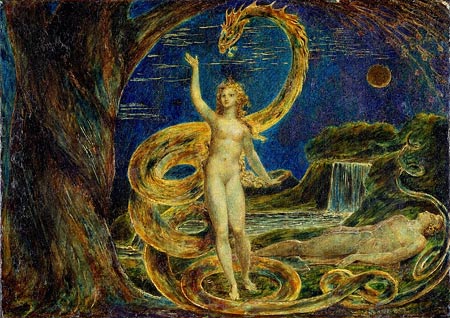
Doubt is a preservative. it keeps the status quo intact -- something that can be managed and mastered with practice, leaving little room for nasty surprises or curve balls. it keeps risk at bay. it reminds us how limited we are, and how disastrous ridicule can be for a delicate ego or a fledgling dream. transcending doubt is extremely seductive and repellent at the same time. Doubt is that shiny red apple on the tree of eden, and Passion is the snake.
Passion can morph into Doubt, in order to outsmart it. suddenly, Passion asks, you can't do that? i doubt it. you can't leave this garden? i doubt it. you can't spin straw into gold? prove it. then doubt starts to look like a dirty little liar.
Doubt! all this time, you led me to believe that i couldn't. i never questioned you. passion has a point: you cannot be trusted.
then which one points to greater delusion? they are both liars. but since the choice to listen to one or the other can be as simple as tuning a radio dial, maybe Passion has a more pleasant playlist than Doubt. maybe Passion offers a less crippling delusion than Doubt. maybe Doubt and Passion play chess on the weekends and make out on mondays. maybe they need eachother in order to convince us to look beyond the garden gate and go bite the apple.
Friday, January 6, 2012
build it
the kevin costner movie "field of dreams" came out when i was five. i remember watching it, thinking the idea was interesting, and wondering what it would be like to do something outwardly foolish because a loud voice in a corn field promised a return (albeit, a rather ominous one...who will come?).
in the movie, kevin costner is an ordinary american -- hard-working, married, poor, and for the box office's sake, conveniently attractive. his wife, in the film, looks like she could sing karaoke in a roadside saloon in any number of southern states, or nevada.
when costner decides to bulldoze the cornfield and replace it with a yankees-grade baseball diamond--because a voice told him that "he will come" if he builds it--she throws a fit and considers her options.
but he does it anyway. eventually, ray liotta comes sauntering out of the corn field to check out kevin's handiwork. he's impressed.
i think about field of dreams when i write. it's a cheesy reference to an 80's housewife excuse to ogle costner in tight faded jeans and a dirty white tee shirt. but it resonates nonetheless.
doing what you want to do takes a shit load of courage. doing what other people tell you to do is the path of least resistance. humans are mostly made of water, we like to take that path as often as possible. but sometimes, building the arc in a landlocked desert feels less insane than wearing a tie and stamping papers or taking orders. we are used to shelving what our toucan nose would prefer to eat for breakfast so we settle for shredded wheat. but we want fruit loops.
i wonder what the world would be like if more people gave themselves permission to build their arc or raze their cornfields for a baseball diamond, all for the sake of following animal instinct. because something told us to do it.
building your arc is easier when everyone seems to be fumbling for answers. there is a cyclical emphasis on results, science, clarity, logic and data to support hypothesis. but when hard science runs reason into a wall, there is an open invitation to waltz through the debris, pick up the pieces and do something extraordinary with them. that is the only way that order has ever been restored. chaos, anarchy, atheism, revolt begets enlightenment, renaissance, democracy, invention.
in his predictable, iowa-stricken life, humble order and tradition (in the form of corn-husking salt-of-the- earth "conservatives") form a zealot army of backward thought, fear-driven attitudes and mob mentality in rows of folding chairs at a PTA meeting (agenda: book banning). as far as the locals were concerned, swapping corn for a baseball field was, at best, an unpopular choice.
offscreen, certain eras have been more conducive to arc building and corn dozing than others, though certain arc builders have met with less enviable fates.
i saw a "performance art" exhibit at the museum of modern art in manhattan two years ago. it was a collection of wild acts and disturbing dares conceived by one marina abramović. the title of her work: the artist is present. this was a pivotal experience for me, and many others. there is now a blog titled "marina abramovic made me cry". an epidemic of weepers inspired a piece in the new york times about marina's collection as well. i was no exception.
in hindsight, i see this as a prophetic expression of where we are now. it was when the horse came unhooked from the cart to wander aimlessly, while the driver (us) still cracks the ghostly outline of the horse's footprints in the dust.
it was life, a sweater, turned inside out and feeling alarmingly more normal than it did, right-side out. what would "normally" seem absurd, ridiculous, laughable, violent or obscene, tickled a revealing nerve: what we took for granted as normal, was actually insane. and what we'd like to label "crazy" or whimsical, was beginning to seem increasingly more logical by comparison. the affect was unsettling and refreshing: it was the stripping down of normal, deletion of clothing and other facades that exposed normal as a fraud. what could we count on then? why did crazy suddenly feel like home?
marina's arc floated by, and i wished i was on it.
i wrote about it that night:
april 24, 2010
we saw videos of marina screaming herself hoarse, dancing herself to exhaustion, and running naked into a man, also naked. live humans, totally nude, facing eachother, guarded the narrow entrance to a wing of the exhibit, stared at eachother straight in the eyes -- unwavering. brushing past to get to the wing, few people faced the man as they sidestepped through -- most faced the woman. toward the end, there was a naked woman mounted high on a white wall, straddling a bicycle seat with arms raised, pits overgrown.
then, a video of marina trying not to spill water from a pot, standing alone in a dismal, chipping, empty kitchen. that's when i started crying. something about the power of interaction? on a human, face to face level, the literal stepping through or stepping aside of norms that suddenly seemed stranger than the bizarre exhibits we were looking at...something too about women. the baring of women, the absurdity of sex, the grotesqueness of our physical world (reduced to a large heap of bloody cattle bones, in a room by itself) carnage, endurance, amid ridiculous worries not to spill the water. disturbance at watching a woman scream until she can't, dance until she collapses, or silently being scrutinized in public. was it her choice? it must have been. but why?
everything we shared as normal suddenly twisted into shock, wonder, there was something distinctly lost and alienated yet familiar in it all.
pubic hair, no attempt at changing nature but rather, amplifying it in a reversal of what is normal/acceptable/disturbing/pleasant or real about women and who we really are. it made me cry.
like the proverbial field of dreams, an arc is a monument to the true self. it is every human's magnum opus. it is permission from the mind to the heart to the hand, in order to realize the soul's mission and design. only secondarily is it a service to humanity -- though that is usually what everyone else remembers, or values most. it is courage combined with what looks like madness, that levels corn fields, builds a boat in the desert, and makes new yorkers cry.
build it.
in the movie, kevin costner is an ordinary american -- hard-working, married, poor, and for the box office's sake, conveniently attractive. his wife, in the film, looks like she could sing karaoke in a roadside saloon in any number of southern states, or nevada.
when costner decides to bulldoze the cornfield and replace it with a yankees-grade baseball diamond--because a voice told him that "he will come" if he builds it--she throws a fit and considers her options.
but he does it anyway. eventually, ray liotta comes sauntering out of the corn field to check out kevin's handiwork. he's impressed.
i think about field of dreams when i write. it's a cheesy reference to an 80's housewife excuse to ogle costner in tight faded jeans and a dirty white tee shirt. but it resonates nonetheless.
doing what you want to do takes a shit load of courage. doing what other people tell you to do is the path of least resistance. humans are mostly made of water, we like to take that path as often as possible. but sometimes, building the arc in a landlocked desert feels less insane than wearing a tie and stamping papers or taking orders. we are used to shelving what our toucan nose would prefer to eat for breakfast so we settle for shredded wheat. but we want fruit loops.
i wonder what the world would be like if more people gave themselves permission to build their arc or raze their cornfields for a baseball diamond, all for the sake of following animal instinct. because something told us to do it.
building your arc is easier when everyone seems to be fumbling for answers. there is a cyclical emphasis on results, science, clarity, logic and data to support hypothesis. but when hard science runs reason into a wall, there is an open invitation to waltz through the debris, pick up the pieces and do something extraordinary with them. that is the only way that order has ever been restored. chaos, anarchy, atheism, revolt begets enlightenment, renaissance, democracy, invention.
in his predictable, iowa-stricken life, humble order and tradition (in the form of corn-husking salt-of-the- earth "conservatives") form a zealot army of backward thought, fear-driven attitudes and mob mentality in rows of folding chairs at a PTA meeting (agenda: book banning). as far as the locals were concerned, swapping corn for a baseball field was, at best, an unpopular choice.
offscreen, certain eras have been more conducive to arc building and corn dozing than others, though certain arc builders have met with less enviable fates.
i saw a "performance art" exhibit at the museum of modern art in manhattan two years ago. it was a collection of wild acts and disturbing dares conceived by one marina abramović. the title of her work: the artist is present. this was a pivotal experience for me, and many others. there is now a blog titled "marina abramovic made me cry". an epidemic of weepers inspired a piece in the new york times about marina's collection as well. i was no exception.
in hindsight, i see this as a prophetic expression of where we are now. it was when the horse came unhooked from the cart to wander aimlessly, while the driver (us) still cracks the ghostly outline of the horse's footprints in the dust.
it was life, a sweater, turned inside out and feeling alarmingly more normal than it did, right-side out. what would "normally" seem absurd, ridiculous, laughable, violent or obscene, tickled a revealing nerve: what we took for granted as normal, was actually insane. and what we'd like to label "crazy" or whimsical, was beginning to seem increasingly more logical by comparison. the affect was unsettling and refreshing: it was the stripping down of normal, deletion of clothing and other facades that exposed normal as a fraud. what could we count on then? why did crazy suddenly feel like home?
marina's arc floated by, and i wished i was on it.
i wrote about it that night:
april 24, 2010
we saw videos of marina screaming herself hoarse, dancing herself to exhaustion, and running naked into a man, also naked. live humans, totally nude, facing eachother, guarded the narrow entrance to a wing of the exhibit, stared at eachother straight in the eyes -- unwavering. brushing past to get to the wing, few people faced the man as they sidestepped through -- most faced the woman. toward the end, there was a naked woman mounted high on a white wall, straddling a bicycle seat with arms raised, pits overgrown.
then, a video of marina trying not to spill water from a pot, standing alone in a dismal, chipping, empty kitchen. that's when i started crying. something about the power of interaction? on a human, face to face level, the literal stepping through or stepping aside of norms that suddenly seemed stranger than the bizarre exhibits we were looking at...something too about women. the baring of women, the absurdity of sex, the grotesqueness of our physical world (reduced to a large heap of bloody cattle bones, in a room by itself) carnage, endurance, amid ridiculous worries not to spill the water. disturbance at watching a woman scream until she can't, dance until she collapses, or silently being scrutinized in public. was it her choice? it must have been. but why?
everything we shared as normal suddenly twisted into shock, wonder, there was something distinctly lost and alienated yet familiar in it all.
pubic hair, no attempt at changing nature but rather, amplifying it in a reversal of what is normal/acceptable/disturbing/pleasant or real about women and who we really are. it made me cry.
like the proverbial field of dreams, an arc is a monument to the true self. it is every human's magnum opus. it is permission from the mind to the heart to the hand, in order to realize the soul's mission and design. only secondarily is it a service to humanity -- though that is usually what everyone else remembers, or values most. it is courage combined with what looks like madness, that levels corn fields, builds a boat in the desert, and makes new yorkers cry.
build it.
Tuesday, January 3, 2012
Subscribe to:
Posts (Atom)