Monday, January 9, 2012
doubt vs. passion
Doubt vs. Passion
in battling Doubt, my arsenal includes memories of times that inspired raw possibility or blissful ignorance: baking my bones in the desert sun, steeping in my emerald lake, being flanked by haughty skyscrapers -- little time pearls plucked from when i believed myself immune to tragedy, or heartbreak.
most decidedly, a teaspoon of delusion is necessary to succeed in a delusional world. so many ideas or thoughts or solutions or whimsical fancies are washed down the mental drain because they seem stupid, hackneyed, done, or unprofitable. then i look around and see people making lives out of thin air, and think, how could they have believed that such a plan would work from the outset? had the same thought occured to me to do xyz stupid thing, i would have been certain that if i'd even pursued the idea, i'd brand myself an idiot for life and get filed away as such -- without hope for parole.
but it seems, the more delusional and self-aggrandizing one is capable of being, the greater the chances of success. it requires a dynamic sleigh ride pulled by the hallowed horses Self-Doubt and Passion.
Passion is the most potent silencer of Doubt. Passion doesn't try to muzzle Doubt. instead, it listens and says without any strain at all, yes, but i can't help it. i will do it anyway, if it kills me, nothing else really matters.
maybe Doubt is Passion's secret frenemy. the more hostile and reasonable Doubt sounds, the more flexible and stalwart the irrationality of Passion becomes. i don't think Passion can be articulated. it is wholly irrational and it has to be, in order to contend with the shrill voice of Doubt.
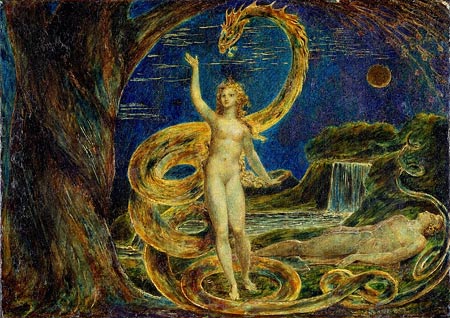
Doubt is a preservative. it keeps the status quo intact -- something that can be managed and mastered with practice, leaving little room for nasty surprises or curve balls. it keeps risk at bay. it reminds us how limited we are, and how disastrous ridicule can be for a delicate ego or a fledgling dream. transcending doubt is extremely seductive and repellent at the same time. Doubt is that shiny red apple on the tree of eden, and Passion is the snake.
Passion can morph into Doubt, in order to outsmart it. suddenly, Passion asks, you can't do that? i doubt it. you can't leave this garden? i doubt it. you can't spin straw into gold? prove it. then doubt starts to look like a dirty little liar.
Doubt! all this time, you led me to believe that i couldn't. i never questioned you. passion has a point: you cannot be trusted.
then which one points to greater delusion? they are both liars. but since the choice to listen to one or the other can be as simple as tuning a radio dial, maybe Passion has a more pleasant playlist than Doubt. maybe Passion offers a less crippling delusion than Doubt. maybe Doubt and Passion play chess on the weekends and make out on mondays. maybe they need eachother in order to convince us to look beyond the garden gate and go bite the apple.
Friday, January 6, 2012
build it
the kevin costner movie "field of dreams" came out when i was five. i remember watching it, thinking the idea was interesting, and wondering what it would be like to do something outwardly foolish because a loud voice in a corn field promised a return (albeit, a rather ominous one...who will come?).
in the movie, kevin costner is an ordinary american -- hard-working, married, poor, and for the box office's sake, conveniently attractive. his wife, in the film, looks like she could sing karaoke in a roadside saloon in any number of southern states, or nevada.
when costner decides to bulldoze the cornfield and replace it with a yankees-grade baseball diamond--because a voice told him that "he will come" if he builds it--she throws a fit and considers her options.
but he does it anyway. eventually, ray liotta comes sauntering out of the corn field to check out kevin's handiwork. he's impressed.
i think about field of dreams when i write. it's a cheesy reference to an 80's housewife excuse to ogle costner in tight faded jeans and a dirty white tee shirt. but it resonates nonetheless.
doing what you want to do takes a shit load of courage. doing what other people tell you to do is the path of least resistance. humans are mostly made of water, we like to take that path as often as possible. but sometimes, building the arc in a landlocked desert feels less insane than wearing a tie and stamping papers or taking orders. we are used to shelving what our toucan nose would prefer to eat for breakfast so we settle for shredded wheat. but we want fruit loops.
i wonder what the world would be like if more people gave themselves permission to build their arc or raze their cornfields for a baseball diamond, all for the sake of following animal instinct. because something told us to do it.
building your arc is easier when everyone seems to be fumbling for answers. there is a cyclical emphasis on results, science, clarity, logic and data to support hypothesis. but when hard science runs reason into a wall, there is an open invitation to waltz through the debris, pick up the pieces and do something extraordinary with them. that is the only way that order has ever been restored. chaos, anarchy, atheism, revolt begets enlightenment, renaissance, democracy, invention.
in his predictable, iowa-stricken life, humble order and tradition (in the form of corn-husking salt-of-the- earth "conservatives") form a zealot army of backward thought, fear-driven attitudes and mob mentality in rows of folding chairs at a PTA meeting (agenda: book banning). as far as the locals were concerned, swapping corn for a baseball field was, at best, an unpopular choice.
offscreen, certain eras have been more conducive to arc building and corn dozing than others, though certain arc builders have met with less enviable fates.
i saw a "performance art" exhibit at the museum of modern art in manhattan two years ago. it was a collection of wild acts and disturbing dares conceived by one marina abramović. the title of her work: the artist is present. this was a pivotal experience for me, and many others. there is now a blog titled "marina abramovic made me cry". an epidemic of weepers inspired a piece in the new york times about marina's collection as well. i was no exception.
in hindsight, i see this as a prophetic expression of where we are now. it was when the horse came unhooked from the cart to wander aimlessly, while the driver (us) still cracks the ghostly outline of the horse's footprints in the dust.
it was life, a sweater, turned inside out and feeling alarmingly more normal than it did, right-side out. what would "normally" seem absurd, ridiculous, laughable, violent or obscene, tickled a revealing nerve: what we took for granted as normal, was actually insane. and what we'd like to label "crazy" or whimsical, was beginning to seem increasingly more logical by comparison. the affect was unsettling and refreshing: it was the stripping down of normal, deletion of clothing and other facades that exposed normal as a fraud. what could we count on then? why did crazy suddenly feel like home?
marina's arc floated by, and i wished i was on it.
i wrote about it that night:
april 24, 2010
we saw videos of marina screaming herself hoarse, dancing herself to exhaustion, and running naked into a man, also naked. live humans, totally nude, facing eachother, guarded the narrow entrance to a wing of the exhibit, stared at eachother straight in the eyes -- unwavering. brushing past to get to the wing, few people faced the man as they sidestepped through -- most faced the woman. toward the end, there was a naked woman mounted high on a white wall, straddling a bicycle seat with arms raised, pits overgrown.
then, a video of marina trying not to spill water from a pot, standing alone in a dismal, chipping, empty kitchen. that's when i started crying. something about the power of interaction? on a human, face to face level, the literal stepping through or stepping aside of norms that suddenly seemed stranger than the bizarre exhibits we were looking at...something too about women. the baring of women, the absurdity of sex, the grotesqueness of our physical world (reduced to a large heap of bloody cattle bones, in a room by itself) carnage, endurance, amid ridiculous worries not to spill the water. disturbance at watching a woman scream until she can't, dance until she collapses, or silently being scrutinized in public. was it her choice? it must have been. but why?
everything we shared as normal suddenly twisted into shock, wonder, there was something distinctly lost and alienated yet familiar in it all.
pubic hair, no attempt at changing nature but rather, amplifying it in a reversal of what is normal/acceptable/disturbing/pleasant or real about women and who we really are. it made me cry.
like the proverbial field of dreams, an arc is a monument to the true self. it is every human's magnum opus. it is permission from the mind to the heart to the hand, in order to realize the soul's mission and design. only secondarily is it a service to humanity -- though that is usually what everyone else remembers, or values most. it is courage combined with what looks like madness, that levels corn fields, builds a boat in the desert, and makes new yorkers cry.
build it.
in the movie, kevin costner is an ordinary american -- hard-working, married, poor, and for the box office's sake, conveniently attractive. his wife, in the film, looks like she could sing karaoke in a roadside saloon in any number of southern states, or nevada.
when costner decides to bulldoze the cornfield and replace it with a yankees-grade baseball diamond--because a voice told him that "he will come" if he builds it--she throws a fit and considers her options.
but he does it anyway. eventually, ray liotta comes sauntering out of the corn field to check out kevin's handiwork. he's impressed.
i think about field of dreams when i write. it's a cheesy reference to an 80's housewife excuse to ogle costner in tight faded jeans and a dirty white tee shirt. but it resonates nonetheless.
doing what you want to do takes a shit load of courage. doing what other people tell you to do is the path of least resistance. humans are mostly made of water, we like to take that path as often as possible. but sometimes, building the arc in a landlocked desert feels less insane than wearing a tie and stamping papers or taking orders. we are used to shelving what our toucan nose would prefer to eat for breakfast so we settle for shredded wheat. but we want fruit loops.
i wonder what the world would be like if more people gave themselves permission to build their arc or raze their cornfields for a baseball diamond, all for the sake of following animal instinct. because something told us to do it.
building your arc is easier when everyone seems to be fumbling for answers. there is a cyclical emphasis on results, science, clarity, logic and data to support hypothesis. but when hard science runs reason into a wall, there is an open invitation to waltz through the debris, pick up the pieces and do something extraordinary with them. that is the only way that order has ever been restored. chaos, anarchy, atheism, revolt begets enlightenment, renaissance, democracy, invention.
in his predictable, iowa-stricken life, humble order and tradition (in the form of corn-husking salt-of-the- earth "conservatives") form a zealot army of backward thought, fear-driven attitudes and mob mentality in rows of folding chairs at a PTA meeting (agenda: book banning). as far as the locals were concerned, swapping corn for a baseball field was, at best, an unpopular choice.
offscreen, certain eras have been more conducive to arc building and corn dozing than others, though certain arc builders have met with less enviable fates.
i saw a "performance art" exhibit at the museum of modern art in manhattan two years ago. it was a collection of wild acts and disturbing dares conceived by one marina abramović. the title of her work: the artist is present. this was a pivotal experience for me, and many others. there is now a blog titled "marina abramovic made me cry". an epidemic of weepers inspired a piece in the new york times about marina's collection as well. i was no exception.
in hindsight, i see this as a prophetic expression of where we are now. it was when the horse came unhooked from the cart to wander aimlessly, while the driver (us) still cracks the ghostly outline of the horse's footprints in the dust.
it was life, a sweater, turned inside out and feeling alarmingly more normal than it did, right-side out. what would "normally" seem absurd, ridiculous, laughable, violent or obscene, tickled a revealing nerve: what we took for granted as normal, was actually insane. and what we'd like to label "crazy" or whimsical, was beginning to seem increasingly more logical by comparison. the affect was unsettling and refreshing: it was the stripping down of normal, deletion of clothing and other facades that exposed normal as a fraud. what could we count on then? why did crazy suddenly feel like home?
marina's arc floated by, and i wished i was on it.
i wrote about it that night:
april 24, 2010
we saw videos of marina screaming herself hoarse, dancing herself to exhaustion, and running naked into a man, also naked. live humans, totally nude, facing eachother, guarded the narrow entrance to a wing of the exhibit, stared at eachother straight in the eyes -- unwavering. brushing past to get to the wing, few people faced the man as they sidestepped through -- most faced the woman. toward the end, there was a naked woman mounted high on a white wall, straddling a bicycle seat with arms raised, pits overgrown.
then, a video of marina trying not to spill water from a pot, standing alone in a dismal, chipping, empty kitchen. that's when i started crying. something about the power of interaction? on a human, face to face level, the literal stepping through or stepping aside of norms that suddenly seemed stranger than the bizarre exhibits we were looking at...something too about women. the baring of women, the absurdity of sex, the grotesqueness of our physical world (reduced to a large heap of bloody cattle bones, in a room by itself) carnage, endurance, amid ridiculous worries not to spill the water. disturbance at watching a woman scream until she can't, dance until she collapses, or silently being scrutinized in public. was it her choice? it must have been. but why?
everything we shared as normal suddenly twisted into shock, wonder, there was something distinctly lost and alienated yet familiar in it all.
pubic hair, no attempt at changing nature but rather, amplifying it in a reversal of what is normal/acceptable/disturbing/pleasant or real about women and who we really are. it made me cry.
like the proverbial field of dreams, an arc is a monument to the true self. it is every human's magnum opus. it is permission from the mind to the heart to the hand, in order to realize the soul's mission and design. only secondarily is it a service to humanity -- though that is usually what everyone else remembers, or values most. it is courage combined with what looks like madness, that levels corn fields, builds a boat in the desert, and makes new yorkers cry.
build it.
Tuesday, January 3, 2012
origami
this town, from certain angles, looks like a punch bowl full of soviet russia. midwinter, the streets fade into an oppressive palette of grays, washed out taupe, and secondhand camel browns. nothing shines -- no hints of red confetti, yellow hibiscus, party sparkles, or swaying palms to halt the insistent rainbow of drab. all surfaces are in need of a spit shine, crumbling walls and disintegrating curbs beg for a dignified burial.
row after row of sensible brick buildings -- jurassic monuments from an era of visual anaesthetics.
i long for a zoning violation in hunter orange, a yarn shop in shocking indigo, or a corrugated, conical structure to disrupt the breadline of tragic stations, warehouses and abandoned popcorn factories. bring on the ghastly neon eyesores -- antidotes to the blah architecture and monochromatic, windowless mordors squatting on neglected sidewalks with accidental foliage.
add winter haze and overcast skies to the background -- silty air, black dots peppering my kleenex, ashy knuckles and the bleakest town in north korea looks like a carnival cruise.
getting out is key. but when i'm inundated with the raggedy quilt of winter qualms week after week, escape seems out of the question. not because it's impossible, but because survival instincts trick me into thinking that i must stay and let the dirge play on -- leaving now would be rude. this is but one pale pocket of the universe. rumors/blind faith suggest that sunnier pastures surely exist, but leaving is always harder than being gone.
a ticket to fiji was not in my cards this december. so finding and forging color on a local, less exotic level became my mission.
reaching back to my high school days, when my half-japanese boyfriend made me a menagerie of origami tulips on a strand of bright, white christmas lights, i decided to try my hand at paper folding. i bought a stack of dazzling origami paper from a craft store and discovered another pasttime that sucks hours into the same black hole that contains lost sock mates, expensive earrings, and passports. indeed, folding paper into three-dimensional tulip bulbs joined the ranks of repetitive motion activity (OCD-fodder) along with knitting pool covers, beating my own personal best at tetris, and playing electronic travel scrabble. i folded incessantly, and filled a victoria's secret gift box with my faux flora for an then-unknown purpose. initially, i planned on placing them on a new string of lights and draping them across my sensible brick mantle (also brown).
a flood in my bedroom forced a "clean cup, move down" affair in my apartment in mid november. room purposes shifted counter-clockwise, and i cleared out my office to make room for my bed, placed my desk in my living room, and shut the door of my beiruted bedroom for a series of russian handymen to inspect and repair at their leisure over the course of a month.
now that i've returned my bed to its rightful place, the office is still empty. having my desk in the middle of the living room created a temporary, anachronistic effect that i found more inspiring than the office. it also created the starving artist illusion of being tight on space -- something that i do not wrestle with in my current abode-- and evokes an urban dwelling with a coveted, seaside zip code.
so the tulips were born. they lived in a hot pink box on my desk, next to my money tree -- the effect was that of a rectangular green glass oasis, adrift in a sea of stain-resistant carpet in need of a dirt devil (artists can't afford vacuums). lacking a string of lights, and the stamina to face the big box stores that sell them, i took a handful of tulips to my parents' house to test their luminosity and lanternability on my mom's christmas tree. her tree lights resembled rose-molded butterballs. they were supposed to be bullet-sized snowballs, but the butter association could not be eradicated.
it was a tight fit, but i managed to shove the tulips over three butterballs and enjoy the flowers of my labor.
upon discovering my homage to the fine art of paper folding, my mother commissioned me to multiply and divide my origami obsession x10 to create tulips for each butterball on her crooked but naturally imperfect evergreen. i accepted. my internal obsessive hobbies bureau (ohb) was ecstatic -- now i could manipulate blossom-dappled paper for hours with a purpose and a deadline.
the origami christmas tree went over quite well with visitors, siblings and such. one aunt coerced me into teaching a fifth grade class how to create tulips, lotuses, and fortune tellers for art class/"decorate the library" day. a string of melancholy blue lights became the host strand for a linear evolution of crumpled attempts, torn edges, and eventually, perfect tulips fashioned by a herd of 9-year-olds.
one boy buried his head in the crook of his elbow in utter despair: "i'll never get the edges to line up" he said. "not in my life. not with my luck". on some level, he was right. these tulips and origami in general, are partial to precision, crisp lines, symmetry, and strong fingernails to iron each fold. sloppy origami is an oxymoron -- in fact, if it is sloppy, it is not origami. i couldn't tell this kid that he had made a mockery of an ancient japanese tradition. instead, i poked a hole in his wrinkled ball of green paper and stuck it on the string of lights with the rest of them. yes, i was an accessory to corner cutting. the kid seemed supremely disappointed in himself, but managed to get his head out his elbow long enough to appreciate the light peering through his mutant tulip.
post-christmas, my sisters and i exorcised all things holiday in my parents' house. we stashed neighbor gifts (popcorn tins, tea pots, cookies in tupperwares, the dancing santa that terrifies the cat) in preparation for a new year. we pulled each tulip off the butterballs and placed them in a tall box. my sister lifted the tree off the square stand while i stood on one corner of it, and laughed. the cat glared -- quietly bidding farewell to his short and inexplicable love affair with an indoor tree.
we dragged it through the front door head first, catching its wide caboose in the door frame and sending a spray of pine needles scattering in remote places. in protest, citing all it had done for us and its stoic tolerance of feline abuse, it clung to the door frame. but what comes in must go out. with a final shove, it was exiled to the curb. the cat wept and waved a starched hanky from the window -- oh, my love.
we decided to give the tulips a final act for new year's eve. popping the tulips on the butterballs once more, we draped the strands over the china hutch and across the white mantle to illuminate our framed baby faces.
back to my empty office space. i envision a moroccan smoking lounge...magenta floor cushions, drum-shaped tables with olives, and a jade tiled fountain in the center of the room, to hold rose petals and live koi -- just a simple upgrade.
i plan to create an entirely new collection of tulips to light the place up -- newspaper clippings, soap or chocolate wrappers, anything that will hold a crease. i've thought to place a wish, a prayer, a curse or a spell in each one -- each guest can pick one to keep -- along with the fortune inside.
while the season insists on conservative tones, and until charm is restored to the streets, i shall adorn butterballs with handcrafted echoes of spring. or perhaps i shall simply go to india.
Sunday, December 18, 2011
beep
your mindspace is the only thing you can truly own. it is actual space, territory, sovereign land with a populace, government, natural resources, creatures and trees.
many of us are living on mindspace reservations -- as permanent or part-time residents. we left our sacred mindspaces--our spiritual edens--long ago, though we may not remember. while we were gone, our mindspace was sold to the highest--sometimes the lowest--bidder. a fence was built. trespassers will be prosecuted.
for the past year, my neighbor's home security system has emitted a loud BEEP every 45 seconds. at first, the noise was unbearable. i would get into my mindspace--writing, reading, being--and then this beep would send my internal decibel soundbar skyrocketing at regular intervals.
the beep made my heart beat faster -- the combined affect of simmering rage that my neighbors could be so inconsiderate and apparently deaf -- and a desperate struggle to constantly regain the integrity of my mindspace.
BEEP like a fork in my toaster
BEEP like pine needles pricking my skull
BEEP my heart dilated with cartoon flames in the background, a knife through the top, a crown at the hilt. rage.
so much for security. i'd welcome any axe-murdering serial killer in for tea and a manicure before i'd agree to rig up my homespace with such insipid interruption. but it wasn't my security that this thing squeaked about every 45 seconds. it was theirs. my corner of the house remained utterly insecure--no safer than a portly calf in a field of ravenous wolves.
so many feverish nights, black paper chains of profane promises to render that security system useless with a flaming molotov cocktail through the kitchen nook window with a nasty note..so many dreams punctuated with subsconsciously explained BEEPS ...that might have taken a more melodious course sans BEEP?
one verdant summer's day, i had the audacity to ask one of my neighbors if the BEEP was something she planned to stop in the near future -- also a test to see just how much she valued her life.
oh, there's nothing we can do about it.
i bought it. i shuffled back to my cave and buried all hope of having a silent homeland, or of creating a no-fly-zone over my precious mindspace. instead of fighting for my right to think and breathe without an audial version of chinese water torture, i moved out of my mindspace and settled on a mindspace reservation.
this mindspace reservation had a list of rules. if something bothers you, there's something wrong with you. be tolerant.
if you can't think, stop trying. chances are you're paranoid and thinking in ape-like loops -- swinging from one branch to another until the bough breaks.
if you ask a question and get an answer that doesn't make sense, you've come to the right place -- this mindspace reservation. no further questions.
when i asked her if the BEEP could be remedied and she said no, why didn't that strike a chord in my Department of Ridiculous and Unacceptable Answers to Very Simple Questions? of course there was something that could be done. but i didn't press it. why? i'm not afraid to make waves, i believe in direct conversation and open communication. but i just took this answer and told myself to stop being so sensitive. deal with it. every. 45. seconds.
months later, i had a guest. within minutes of entering my homespace, he asked how i managed to live with that insufferable beeping. i realized, then, that i had forfeited my mindspace integrity -- my ability to access my mindspace, to prevent invasion, guard against intruders, and expel pollutants.
i called the "home security" company. yes, hello. my neighbors have exactly one hour to live unless you can tell put a swift and permanent end to the BEEP.
after some diplomatic words about the level of frustration i had experienced thanks to the BEEP, this very helpful agent explained that the BEEPing was caused by a lack of signal being sent from the keypad to the security center since 2010. all this time: the beeping, the swearing, the praying for hellfire to melt that hateful keypad into oblivion...how could they be so obsessed with security, but unable to recognize an obvious malfunction?
i called the neighbors.
once it could be proved that the beep was not a sign that the safety box was doing its job but rather, a symbol of dangerous vulnerability, i got results. the beep stopped the very next day.
homespace security -- much like homeLAND security -- generally takes precedence over mindspace integrity. how often do we forfeit mindspace integrity for the appearance of security, for the constant illusion of being safe? if more of us had access to our mindspace, would the need for illusive physical security be exposed as the malfunctioning annoyance that it is?
why did i resign myself to living on a mindspace reservation for months? maybe i identified with the importance of physical security (though apparently not my own) and the fact that most people believe that preventing home invasion is more important than preventing mindspace invasion. maybe mindspace is a foreign concept entirely. maybe mindspace is a dark and haunted forest for some people, or their exiled status hasn't even occurred to them.
some people have identified the value of mindspace and found ways to commodify or control it. they are hoping that most people will never ask for their mindspace back and that they will continue to live on mindspace reservations, forget where they came from, lose their compass, and become lost. and they'll agree to do it in exchange for what looks like physical security.
the beep reminded me: your neighbors, like most people, value symbolic physical security AND believe they are not safe without it. this belief is strong enough to make people pay for a sense of security and live with an incessant beep.
i imagine that for my neighbors, the beep was far from annoying -- it was an anodyne promise of safety from the threat of intruders. each beep inspired a knowing smile, ahhh....i am safe. carry on.
homespace is a portal for mindspace. when it came under attack by tech-challenged neighbors, i didn't defend. i sold to the lowest bidder, packed a toothbrush and surrendered.
never again.
pay attention to the things that prevent you from accessing your mindspace. it's the only vestige of personal property or true value on earth, the only thing you can truly own or cultivate. it is incredibly valuable -- a vibrant human mindspace is a pre-requisite for coup d'etats, revolutions, renaissance, sistine chapels, cures, concertos, macchu picchus and moon landings. it is hard to control millions of high octane human mindspaces. much easier to corral them into mindspace reservations.
build a moat around your mindspace. fill it with ferocious crocodiles, loch ness monsters, fanged mermaids. it's yours and it's not for sale. visit it often.
shut out the noise. every word, headline, and squawking lunatic on CNN. every advertisement that disrupts your flow, every flashing billboard, every pop-up, every ding! from your phone or gchat is like a barrel of nuclear waste burying itself in your mindspace. dig it up, return to sender.
have we decided that mindspace pollution -- like CO2 and other noxious particles -- is unavoidable? even if we keep it out of our own backyard, will we always be downwind of the exiled minds who do not know they are living in an arid wasteland, the ones who either can't hear the beep anymore, or who need to hear it in order to feel safe?
many of us are living on mindspace reservations -- as permanent or part-time residents. we left our sacred mindspaces--our spiritual edens--long ago, though we may not remember. while we were gone, our mindspace was sold to the highest--sometimes the lowest--bidder. a fence was built. trespassers will be prosecuted.
for the past year, my neighbor's home security system has emitted a loud BEEP every 45 seconds. at first, the noise was unbearable. i would get into my mindspace--writing, reading, being--and then this beep would send my internal decibel soundbar skyrocketing at regular intervals.
the beep made my heart beat faster -- the combined affect of simmering rage that my neighbors could be so inconsiderate and apparently deaf -- and a desperate struggle to constantly regain the integrity of my mindspace.
BEEP like a fork in my toaster
BEEP like pine needles pricking my skull
BEEP my heart dilated with cartoon flames in the background, a knife through the top, a crown at the hilt. rage.
so much for security. i'd welcome any axe-murdering serial killer in for tea and a manicure before i'd agree to rig up my homespace with such insipid interruption. but it wasn't my security that this thing squeaked about every 45 seconds. it was theirs. my corner of the house remained utterly insecure--no safer than a portly calf in a field of ravenous wolves.
so many feverish nights, black paper chains of profane promises to render that security system useless with a flaming molotov cocktail through the kitchen nook window with a nasty note..so many dreams punctuated with subsconsciously explained BEEPS ...that might have taken a more melodious course sans BEEP?
one verdant summer's day, i had the audacity to ask one of my neighbors if the BEEP was something she planned to stop in the near future -- also a test to see just how much she valued her life.
oh, there's nothing we can do about it.
i bought it. i shuffled back to my cave and buried all hope of having a silent homeland, or of creating a no-fly-zone over my precious mindspace. instead of fighting for my right to think and breathe without an audial version of chinese water torture, i moved out of my mindspace and settled on a mindspace reservation.
this mindspace reservation had a list of rules. if something bothers you, there's something wrong with you. be tolerant.
if you can't think, stop trying. chances are you're paranoid and thinking in ape-like loops -- swinging from one branch to another until the bough breaks.
if you ask a question and get an answer that doesn't make sense, you've come to the right place -- this mindspace reservation. no further questions.
when i asked her if the BEEP could be remedied and she said no, why didn't that strike a chord in my Department of Ridiculous and Unacceptable Answers to Very Simple Questions? of course there was something that could be done. but i didn't press it. why? i'm not afraid to make waves, i believe in direct conversation and open communication. but i just took this answer and told myself to stop being so sensitive. deal with it. every. 45. seconds.
months later, i had a guest. within minutes of entering my homespace, he asked how i managed to live with that insufferable beeping. i realized, then, that i had forfeited my mindspace integrity -- my ability to access my mindspace, to prevent invasion, guard against intruders, and expel pollutants.
i called the "home security" company. yes, hello. my neighbors have exactly one hour to live unless you can tell put a swift and permanent end to the BEEP.
after some diplomatic words about the level of frustration i had experienced thanks to the BEEP, this very helpful agent explained that the BEEPing was caused by a lack of signal being sent from the keypad to the security center since 2010. all this time: the beeping, the swearing, the praying for hellfire to melt that hateful keypad into oblivion...how could they be so obsessed with security, but unable to recognize an obvious malfunction?
i called the neighbors.
once it could be proved that the beep was not a sign that the safety box was doing its job but rather, a symbol of dangerous vulnerability, i got results. the beep stopped the very next day.
homespace security -- much like homeLAND security -- generally takes precedence over mindspace integrity. how often do we forfeit mindspace integrity for the appearance of security, for the constant illusion of being safe? if more of us had access to our mindspace, would the need for illusive physical security be exposed as the malfunctioning annoyance that it is?
why did i resign myself to living on a mindspace reservation for months? maybe i identified with the importance of physical security (though apparently not my own) and the fact that most people believe that preventing home invasion is more important than preventing mindspace invasion. maybe mindspace is a foreign concept entirely. maybe mindspace is a dark and haunted forest for some people, or their exiled status hasn't even occurred to them.
some people have identified the value of mindspace and found ways to commodify or control it. they are hoping that most people will never ask for their mindspace back and that they will continue to live on mindspace reservations, forget where they came from, lose their compass, and become lost. and they'll agree to do it in exchange for what looks like physical security.
the beep reminded me: your neighbors, like most people, value symbolic physical security AND believe they are not safe without it. this belief is strong enough to make people pay for a sense of security and live with an incessant beep.
i imagine that for my neighbors, the beep was far from annoying -- it was an anodyne promise of safety from the threat of intruders. each beep inspired a knowing smile, ahhh....i am safe. carry on.
homespace is a portal for mindspace. when it came under attack by tech-challenged neighbors, i didn't defend. i sold to the lowest bidder, packed a toothbrush and surrendered.
never again.
pay attention to the things that prevent you from accessing your mindspace. it's the only vestige of personal property or true value on earth, the only thing you can truly own or cultivate. it is incredibly valuable -- a vibrant human mindspace is a pre-requisite for coup d'etats, revolutions, renaissance, sistine chapels, cures, concertos, macchu picchus and moon landings. it is hard to control millions of high octane human mindspaces. much easier to corral them into mindspace reservations.
build a moat around your mindspace. fill it with ferocious crocodiles, loch ness monsters, fanged mermaids. it's yours and it's not for sale. visit it often.
shut out the noise. every word, headline, and squawking lunatic on CNN. every advertisement that disrupts your flow, every flashing billboard, every pop-up, every ding! from your phone or gchat is like a barrel of nuclear waste burying itself in your mindspace. dig it up, return to sender.
have we decided that mindspace pollution -- like CO2 and other noxious particles -- is unavoidable? even if we keep it out of our own backyard, will we always be downwind of the exiled minds who do not know they are living in an arid wasteland, the ones who either can't hear the beep anymore, or who need to hear it in order to feel safe?
Friday, December 16, 2011
rainbow picture
i write because i need evidence that i can still think for myself. even then, what i see after i'm done typing furiously is a zombie in a necktie. nothing of mine, nothing alive, just a flat reflection of the debris in my mind. i call it conditioning.
i remember having elaborate mental images when i was little, and being so frustrated with my inability to express on paper what i could see so clearly in my mind. one picture i drew over and over again was that of a castle on the left, a knight on the ground atop a white horse, a princess waving to him from her window, a rainbow and a token half sunshine in the corner of the page. i had seen this drawn by classmates, my sister, and also on a scented markers commercial. it seemed to be the only acceptable thing to draw. i had other things in mind. monsters, medusas, landscapes, gnarled trees from dreams. i shut them out, and continued to draw this castle scene like a mad woman in a sanitarium. drawing it each time, as if for the first time, always annoyed at the insipid, babyish rendition of the award-winning masterpiece that i wanted it to be. always garnering praise in sticker form for drawing the same damn thing, day in and day out.
21 years of school taught me to come up with an idea, doubt it because it was my own, alter it to look more like all the ideas that had come before, then build a case for it using "research" or, take a look at everyone else's rainbow pictures and do my best to imitate. i wrote a paper in 4th grade about bees. i described the black bees as regular bees that looked like they'd fallen in an ink well. my teacher red lined it, and told me it didn't belong in a research paper. in graduate school, i wanted to write about a global return to existentialism, to religion, but not as it was traditionally understood. i wanted to write about the irony of an "advanced" civilization returning to a less secular, commercial, divided by nationalism world via interconnection and necessity. it was shot down. i ended up writing about modernist movements in the middle east, far off the mark that was my original idea. the idea itself was not as clear as the rainbow picture, but the feeling of it was.
and that's what i wanted to create. the energetic address for the ideas that i wanted to explore was a clear coordinate. the affect, the approach, the final product -- i didn't want it to look like a patchwork quilt of soggy ideas gleaned from the shelves of a moldy library. i wanted it to border on science fiction. i wanted to point out that we will need more ideas that are not and cannot be based on what has come before, because where we're going, we don't need roads.
the idea that nothing is new under the sun rings true. at its root, nothing is perfectly original or unprecedented. lady gaga: a trailblazer. but musical talent paired with shock value and a penchant for self-reinvention is nothing novel. it only seems new because baseline ideas are shuffled like a deck of cards, and when our favorite cards resurface in a flashy color, we subconsciously appreciate the familiarity, thinking we're admiring novelty. so it's true, nothing can be truly original, but as long as originality is kept on the bottom of the deck in school, we are doomed to recycle anemic themes and impotent thought. in short, certain corners of society (read:education) are in dire need of a dust rag.
imitation. writing term papers or articles for web posts etc. in school (especially graduate school) started to feel like looking into a kaleidescope. my peer's papers, my papers, were all unique in the same way--with their own combination of words and conclusions. all told, it was the same sand and glass in random formation. everyone was looking through the same hole, marveling at their view as if they had any hand in creating it.
regurgitating old information and using it as a yardstick for a convoluted thesis is the academic equivalent of a pyramid scheme. why not encourage students, people, to smash the kaleidescope open. look through a different hole. expand the scope of possibilities outside random sampling of designs generated by a narrow hall of mirrors.
are kaleidescopes predictable? no two formations are exactly the same. many kaleidescopes distort the light and colors of its surroundings, some use beads, liquid, marbles, sand, glass all of which can never replicate a design. so each twist, then, could be an original, something fresh and unprecedented. but the mode and medium never change, and the person peering through the kaleidescope is not the artist, but the observer. this is what "school" often teaches students to become -- not the innovator, artist, mold breaker or galileo -- but the imitator, twister, guardian of the status quo observer of creations built on other kaleidescopic creations, cities built on cities, brilliance traced on tissue paper. the result is a diluted rendering of cannibalised information. in other words, a rainbow picture.
“The aim of education must be the training of independently acting and thinking individuals who, however, see in the service to the community their highest life problem.”
—Albert Einstein --- From Address, October 15, 1936 – Reprinted in Ideas and Opinions, 60.
i remember having elaborate mental images when i was little, and being so frustrated with my inability to express on paper what i could see so clearly in my mind. one picture i drew over and over again was that of a castle on the left, a knight on the ground atop a white horse, a princess waving to him from her window, a rainbow and a token half sunshine in the corner of the page. i had seen this drawn by classmates, my sister, and also on a scented markers commercial. it seemed to be the only acceptable thing to draw. i had other things in mind. monsters, medusas, landscapes, gnarled trees from dreams. i shut them out, and continued to draw this castle scene like a mad woman in a sanitarium. drawing it each time, as if for the first time, always annoyed at the insipid, babyish rendition of the award-winning masterpiece that i wanted it to be. always garnering praise in sticker form for drawing the same damn thing, day in and day out.
21 years of school taught me to come up with an idea, doubt it because it was my own, alter it to look more like all the ideas that had come before, then build a case for it using "research" or, take a look at everyone else's rainbow pictures and do my best to imitate. i wrote a paper in 4th grade about bees. i described the black bees as regular bees that looked like they'd fallen in an ink well. my teacher red lined it, and told me it didn't belong in a research paper. in graduate school, i wanted to write about a global return to existentialism, to religion, but not as it was traditionally understood. i wanted to write about the irony of an "advanced" civilization returning to a less secular, commercial, divided by nationalism world via interconnection and necessity. it was shot down. i ended up writing about modernist movements in the middle east, far off the mark that was my original idea. the idea itself was not as clear as the rainbow picture, but the feeling of it was.
and that's what i wanted to create. the energetic address for the ideas that i wanted to explore was a clear coordinate. the affect, the approach, the final product -- i didn't want it to look like a patchwork quilt of soggy ideas gleaned from the shelves of a moldy library. i wanted it to border on science fiction. i wanted to point out that we will need more ideas that are not and cannot be based on what has come before, because where we're going, we don't need roads.
the idea that nothing is new under the sun rings true. at its root, nothing is perfectly original or unprecedented. lady gaga: a trailblazer. but musical talent paired with shock value and a penchant for self-reinvention is nothing novel. it only seems new because baseline ideas are shuffled like a deck of cards, and when our favorite cards resurface in a flashy color, we subconsciously appreciate the familiarity, thinking we're admiring novelty. so it's true, nothing can be truly original, but as long as originality is kept on the bottom of the deck in school, we are doomed to recycle anemic themes and impotent thought. in short, certain corners of society (read:education) are in dire need of a dust rag.
imitation. writing term papers or articles for web posts etc. in school (especially graduate school) started to feel like looking into a kaleidescope. my peer's papers, my papers, were all unique in the same way--with their own combination of words and conclusions. all told, it was the same sand and glass in random formation. everyone was looking through the same hole, marveling at their view as if they had any hand in creating it.
regurgitating old information and using it as a yardstick for a convoluted thesis is the academic equivalent of a pyramid scheme. why not encourage students, people, to smash the kaleidescope open. look through a different hole. expand the scope of possibilities outside random sampling of designs generated by a narrow hall of mirrors.
are kaleidescopes predictable? no two formations are exactly the same. many kaleidescopes distort the light and colors of its surroundings, some use beads, liquid, marbles, sand, glass all of which can never replicate a design. so each twist, then, could be an original, something fresh and unprecedented. but the mode and medium never change, and the person peering through the kaleidescope is not the artist, but the observer. this is what "school" often teaches students to become -- not the innovator, artist, mold breaker or galileo -- but the imitator, twister, guardian of the status quo observer of creations built on other kaleidescopic creations, cities built on cities, brilliance traced on tissue paper. the result is a diluted rendering of cannibalised information. in other words, a rainbow picture.
“The aim of education must be the training of independently acting and thinking individuals who, however, see in the service to the community their highest life problem.”
—Albert Einstein --- From Address, October 15, 1936 – Reprinted in Ideas and Opinions, 60.
Thursday, December 15, 2011
heathen values
wake up on a december morning, the sky is still a dust cloud after weeks of pollution, dust, parts per million becoming parts of the millions living in this bowl. blue skies are sponged out by gray haze, the sun is a nebulous orb, a goopy-eyed spectre. it looks a storybook english morning -- a modern moor sans clotted cream, charming garden gates on rusted hinges leading to winter gardens with ragged, edible roots in handbaskets. in this faux mist -- quaint as a fog machine in a homespun spook alley -- little hints of the past catch glints of muted light. christmas lights are more sporadic this year, and less meticulously placed. nails might be missing, husbands might be missing, ladders not tall enough, or being used to earn money for bread. hope hangs at crooked angles in gingerbread colors, jewel-themed ovals, white or neon icicles still tangled up from their cardboard coffins. wires are not as taut as years past, plugs and outlets are in plain sight, wreaths or gold stars are pinned in solitary confinement, shielded by storm doors. most are just trifles of the holiday -- a public nod to the number on the calendar, to tradition for what it used to mean, or maybe a decree that despair has not consumed this household -- at least not entirely.
december is the darkest month of the year, with the shortest sun-lit hours in the northern hemisphere -- the sun having migrated south for the winter. people go crazy. they spend time away from their families to buy things for their families or work longer hours to be able to buy things for their families, often missing the irony. it is a schizophrenic time, crowds of people are in wind-up mode, doing the opposite of what they think they're doing, and doing it frantically.
it's dark and people get winter blues: seasonal blues, family-induced anxiety, financials-induced melancholia. we suffer an end-of-year crisis when we take stock of our storehouses and ask why it's not overflowing or if it is, why our love chalices are empty or why a void of one kind or another has the audacity to poke a hole in our personal flotation device. a moroccan woman in rabat once told me that moroccans experience seasonal blues during their winter, just like americans. the difference, she said, is that it's accepted as a normal and communal event that everyone talks about the way americans discuss football. it isn't personalized in language either. one would not ask another, "how is your depression?" but rather, "how is the depression?" it's this burden carried by everyone who feels it, and is therefore, a much lighter load. it is also understood that once the season ends, so will the depression.
to stave off the seasonal blues in the darkest parts of europe, heathen folk would drag enormous logs into their villages and light them on fire. the flames would drive out the darkness, the heat would burn up the cold, and people would dance and eat and play music. it was called yule. yule was an all-nighter pagan rave that celebrated the holiness of mothers, of human origin, of the divine feminine. it was about plenty, abundance, and light in the darkness. these celebrations climaxed on december 25th, in a soul-mother celebration called módraniht -- mother's night. as a matter of convenience, the romans decided to co-opt december 25 for christmas purposes. if people were already celebrating that day, they wouldn't mind forgetting why and adopting a completely random, government-endorsed reason for the season.
since we seem to have lost the well-meaning battle to return the meaning of christmas to the roman catholic concept of christmas, perhaps it should be a time of year when we embrace our heathen roots. december is a month of darkness, depression, people have known this for thousands of years. even in the sunny isles of greece, they made up a story to explain the darker days of winter -- it commemorated the abduction of demeter's daughter persephone, who was dragged down to a gloomy underworld by the god of death, hades. electricity and zoloft seem to have rendered our memories quite thin. romans had saturnalia (before christianity presented itself as a convenient form of government that would literally regulate humans in this life and the next). they partied. they lit torches. they did things that cannot be depicted in textbooks. they gathered in halls, huts, yurts, they huddled around blazing fires -- anything to drive out the cold with literal light and flame, coupled with human interaction and a belligerent enjoyment of abundance, rebirth, life and light in a season of scarcity, death, and darkness. it used to be natural response to the season, also an act of resilience inspired by threatening conditions. we seem to have had that down thousands of years ago, but years of catholic reconditioning, puritan ranting, and commercial brainwashing have left us dancing in the mud, not really sure why we still bother.
instead of making christmas all about jesus, why not celebrate his birthday and death day when it actually happened -- in the spring? christmas, or yule, inspires the human instinct for survival. as they did in the yuletide days, people still come together, laugh together, share food and shelter against the brutality of winter. and what happened when people with animal instincts got together under one thatched roof? eating, drinking, merry making. and it didn't revolve around the birth of one man. it revolved around birth in general, our own births, a divine mother, origin, and the promise of rebirth -- because the idea of living in winter indefinitely was unpalatable, even for the burly germanic tribes and norse folk. it was a collective agreement to respond to "the depression" with flippant festivity, praying for redemption in the spring (during rome's newly-designated "month of purification" now known as february -- deliberately the shortest month of the year).
celebration revolved around natural, observable phenomena, like the winter solstice. lunar and solar activity dictated life long before we adhered to a calendar arbitrarily designed by supserstitious roman rulers. imagine if we still observed the activity of the sun and moon as often as we consult a smart phone or a microwave clock. imagine if the effects of the tide, the strength of the sun, the position of the moon, mattered now as it did then. our realities have changed drastically, but have humans really changed? our heathen side reigns supreme -- especially in times when nature has us up against a wall. most people don't stop to ponder on the miracle of a baby born of immaculate conception in the middle east. what if we celebrated mothers from sun down to sun up in a wild, debaucherous saturnalia with raging flames on fallen logs and plenty of figgy pudding (drenched in cognac)? as if to say:
"we are human. we have heathen roots that are sometimes at odds with our divine origin or [we hope] destination. we used to be ruled by the sun, moon, stars. we used to celebrate women as sacred generators of life. we used to drive away the winter cold with unapologetic heathen rituals that had nothing to do with jesus. for one day, or one season, we will give up all pretense of synthetic religion and instead, embrace the unifying truths that apply to all humans struggling to survive. we throw down our weapons, grievances, bad blood, because survival is interdependent. in this season, the will to survive outweighs the need to be right."
heathen values recognize the human condition that christian values implicitly dismissed as a temporary pit stop before we reach the promised kitchen with fresh pie in the sky. in a time of mass identity crises and people waking up from money comas, being human has lost its sanitized, monetized, religionized patina. we are all vulnerable--some of us are realizing that for the first time--and this life might be all we've got to live for.
we need other humans to survive, emotionally and physically. we get sad, especially when it gets dark. we provide light by dragging large logs into our shelters and lighting them on fire. we have mothers, we can all believe in that, just like we can believe in the existence of the sun, the moon, and the likelihood of a vernal equinox. it's not a denial of christianity or trend toward secularism -- it's a return to humanity. it's an acknowledgment of our unique condition and cosmic realities in the universe, which are just as heavenly as the story of a child born in bethlehem + sent to save the world. would we find greater occasion to agree with eachother, love eachother, gather together to share nothing more than warmth, shelter and food if we centered such an occasion on the heathen principles of sun, season, and mothers? would we have any reason for conflict, consumption, war or wal-mart?
december is the darkest month of the year, with the shortest sun-lit hours in the northern hemisphere -- the sun having migrated south for the winter. people go crazy. they spend time away from their families to buy things for their families or work longer hours to be able to buy things for their families, often missing the irony. it is a schizophrenic time, crowds of people are in wind-up mode, doing the opposite of what they think they're doing, and doing it frantically.
it's dark and people get winter blues: seasonal blues, family-induced anxiety, financials-induced melancholia. we suffer an end-of-year crisis when we take stock of our storehouses and ask why it's not overflowing or if it is, why our love chalices are empty or why a void of one kind or another has the audacity to poke a hole in our personal flotation device. a moroccan woman in rabat once told me that moroccans experience seasonal blues during their winter, just like americans. the difference, she said, is that it's accepted as a normal and communal event that everyone talks about the way americans discuss football. it isn't personalized in language either. one would not ask another, "how is your depression?" but rather, "how is the depression?" it's this burden carried by everyone who feels it, and is therefore, a much lighter load. it is also understood that once the season ends, so will the depression.
to stave off the seasonal blues in the darkest parts of europe, heathen folk would drag enormous logs into their villages and light them on fire. the flames would drive out the darkness, the heat would burn up the cold, and people would dance and eat and play music. it was called yule. yule was an all-nighter pagan rave that celebrated the holiness of mothers, of human origin, of the divine feminine. it was about plenty, abundance, and light in the darkness. these celebrations climaxed on december 25th, in a soul-mother celebration called módraniht -- mother's night. as a matter of convenience, the romans decided to co-opt december 25 for christmas purposes. if people were already celebrating that day, they wouldn't mind forgetting why and adopting a completely random, government-endorsed reason for the season.
since we seem to have lost the well-meaning battle to return the meaning of christmas to the roman catholic concept of christmas, perhaps it should be a time of year when we embrace our heathen roots. december is a month of darkness, depression, people have known this for thousands of years. even in the sunny isles of greece, they made up a story to explain the darker days of winter -- it commemorated the abduction of demeter's daughter persephone, who was dragged down to a gloomy underworld by the god of death, hades. electricity and zoloft seem to have rendered our memories quite thin. romans had saturnalia (before christianity presented itself as a convenient form of government that would literally regulate humans in this life and the next). they partied. they lit torches. they did things that cannot be depicted in textbooks. they gathered in halls, huts, yurts, they huddled around blazing fires -- anything to drive out the cold with literal light and flame, coupled with human interaction and a belligerent enjoyment of abundance, rebirth, life and light in a season of scarcity, death, and darkness. it used to be natural response to the season, also an act of resilience inspired by threatening conditions. we seem to have had that down thousands of years ago, but years of catholic reconditioning, puritan ranting, and commercial brainwashing have left us dancing in the mud, not really sure why we still bother.
instead of making christmas all about jesus, why not celebrate his birthday and death day when it actually happened -- in the spring? christmas, or yule, inspires the human instinct for survival. as they did in the yuletide days, people still come together, laugh together, share food and shelter against the brutality of winter. and what happened when people with animal instincts got together under one thatched roof? eating, drinking, merry making. and it didn't revolve around the birth of one man. it revolved around birth in general, our own births, a divine mother, origin, and the promise of rebirth -- because the idea of living in winter indefinitely was unpalatable, even for the burly germanic tribes and norse folk. it was a collective agreement to respond to "the depression" with flippant festivity, praying for redemption in the spring (during rome's newly-designated "month of purification" now known as february -- deliberately the shortest month of the year).
celebration revolved around natural, observable phenomena, like the winter solstice. lunar and solar activity dictated life long before we adhered to a calendar arbitrarily designed by supserstitious roman rulers. imagine if we still observed the activity of the sun and moon as often as we consult a smart phone or a microwave clock. imagine if the effects of the tide, the strength of the sun, the position of the moon, mattered now as it did then. our realities have changed drastically, but have humans really changed? our heathen side reigns supreme -- especially in times when nature has us up against a wall. most people don't stop to ponder on the miracle of a baby born of immaculate conception in the middle east. what if we celebrated mothers from sun down to sun up in a wild, debaucherous saturnalia with raging flames on fallen logs and plenty of figgy pudding (drenched in cognac)? as if to say:
"we are human. we have heathen roots that are sometimes at odds with our divine origin or [we hope] destination. we used to be ruled by the sun, moon, stars. we used to celebrate women as sacred generators of life. we used to drive away the winter cold with unapologetic heathen rituals that had nothing to do with jesus. for one day, or one season, we will give up all pretense of synthetic religion and instead, embrace the unifying truths that apply to all humans struggling to survive. we throw down our weapons, grievances, bad blood, because survival is interdependent. in this season, the will to survive outweighs the need to be right."
heathen values recognize the human condition that christian values implicitly dismissed as a temporary pit stop before we reach the promised kitchen with fresh pie in the sky. in a time of mass identity crises and people waking up from money comas, being human has lost its sanitized, monetized, religionized patina. we are all vulnerable--some of us are realizing that for the first time--and this life might be all we've got to live for.
we need other humans to survive, emotionally and physically. we get sad, especially when it gets dark. we provide light by dragging large logs into our shelters and lighting them on fire. we have mothers, we can all believe in that, just like we can believe in the existence of the sun, the moon, and the likelihood of a vernal equinox. it's not a denial of christianity or trend toward secularism -- it's a return to humanity. it's an acknowledgment of our unique condition and cosmic realities in the universe, which are just as heavenly as the story of a child born in bethlehem + sent to save the world. would we find greater occasion to agree with eachother, love eachother, gather together to share nothing more than warmth, shelter and food if we centered such an occasion on the heathen principles of sun, season, and mothers? would we have any reason for conflict, consumption, war or wal-mart?
Subscribe to:
Posts (Atom)


